Thinking about solar panel but worried about bulky panels and clashing aesthetics? BIPV lets you turn parts of your building—roof tiles, facades, or even windows—into active power generators without sacrificing design. In Bipv Solar Panel If you want clean energy that doubles as building material, BIPV integrates photovoltaics directly into your structure to save space and blend with the architecture.
You’ll learn how BIPV differs from conventional rooftop systems, where it works best, and what real benefits and trade-offs to expect for performance, cost, and design flexibility. The next sections dive into technical basics, practical applications, and the scenarios where BIPV makes the most sense for your project.
Understanding BIPV Solar Panels
BIPV replaces conventional building materials with solar-generating components that serve both structural and electrical functions. Expect design trade-offs, specific installation requirements, and variations in appearance and performance depending on the product you choose.
What Are BIPV Solar Panels
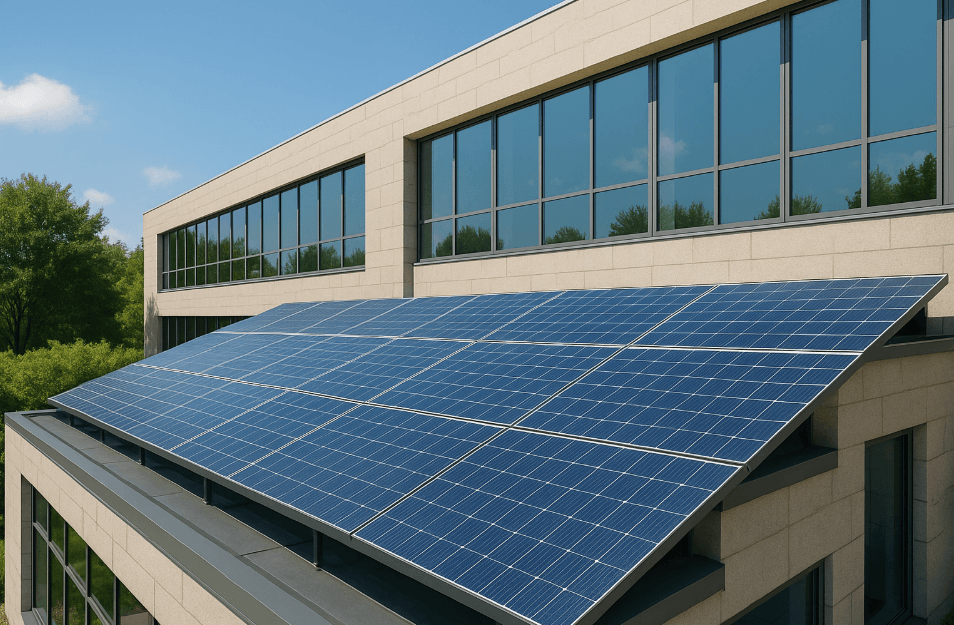
Building-integrated photovoltaics (BIPV) are photovoltaic materials built into your building’s envelope—roofing, façades, windows, or canopies—so they become part of the structure rather than an add-on. You get a dual-purpose element: it provides weather protection or glazing while generating electricity.
BIPV products come as modules, tiles, glass units, or cladding panels sized and shaped to match architectural requirements. They often connect to your building’s electrical system and can be grid-tied or paired with battery storage for on-site use. Performance depends on orientation, tilt, shading, and the PV technology selected.
How BIPV Differs From Traditional Solar Solutions
Unlike rack-mounted PV systems that sit above roofing materials, BIPV replaces those materials, affecting load paths, weatherproofing, and fire performance. You must coordinate BIPV early in design because it influences structural dimensions, waterproofing details, and building permits.
Cost comparisons vary: BIPV often has higher initial cost per watt because of custom integration and dual-function engineering, but it reduces separate roofing or façade material expenses and can improve aesthetics and usable floor area. Efficiency per module may be lower than high-efficiency rooftop panels, so system sizing and energy yield calculations matter more.
Types of BIPV Technologies
- Crystalline silicon modules: Familiar cells in custom-shaped modules and tiles. They offer proven longevity and moderate efficiency and are common for roofs and cladding.
- Thin-film PV: Flexible or semi-transparent films (e.g., CIGS, a-Si) that integrate into curved surfaces or skylights. They perform better in diffuse light and offer smoother visual textures.
- Building-integrated glass (BIPV glazing): Laminated or insulated glass units with embedded cells for windows and curtain walls. You can choose between opaque, semi-transparent, or fritted options to balance light transmission and generation.
- Solar tiles and roof membranes: Interlocking tiles or membrane-integrated cells that mimic roofing materials for historic or high-design projects.
Use the table below to compare typical characteristics:
| Technology | Typical Use | Visual Impact | Relative Efficiency |
| Crystalline silicon modules | Roofs, façades | Distinct panel look | High |
| Thin-film (CIGS, a‑Si) | Curves, skylights | Smooth, uniform | Moderate–Low |
| BIPV glazing | Windows, curtain walls | Transparent/semi‑transparent | Moderate |
| Solar tiles/membranes | Roof replacement | Roof-like appearance | Moderate |
Pick the technology that matches your design priorities, energy goals, and budget.
See also: Advantages and Disadvantages of Technology
Applications and Benefits of BIPV Solar Panels
BIPV panels replace or form building elements to generate electricity, save material and maintain design intent. They work on roofs, façades, skylights, and balustrades, delivering on-site generation, reduced balance-of-system costs, and integrated weatherproofing.
Residential and Commercial Integration
You can use BIPV as roof tiles, curtain walls, or window glazing in both homes and offices.
On residences, solar roof tiles and façade panels preserve rooflines while producing power for your HVAC, EV charging, and appliances. They reduce the need for separate racking and can cut permitting complexity where building envelopes already require replacement.
In commercial buildings, BIPV can cover large façades and canopies to reduce peak demand and lower tenant energy bills.
Integrating BIPV into new-build or retrofit projects can offset common-area loads and provide leased-energy revenue streams.
Maintenance access, fire-rating, and local building codes will shape your system design and lifecycle costs.
Aesthetic and Architectural Value
BIPV offers customizable form and finish so you can match color, texture, and transparency to design goals.
You can choose opaque modules for cladding, semi-transparent glass for atria, or patterned arrays for visual interest. This helps you preserve façade language without visible racking or bulky panels.
Using BIPV early in design reduces clashes between energy systems and architectural intent.
It also increases project marketability: buyers and tenants often value clean building lines and integrated renewables.
Be aware that higher customization can increase lead times and unit cost compared with standard PV modules.
Energy Efficiency and Sustainability
You gain on-site generation that reduces grid imports and transmission losses, directly lowering your building’s operational emissions.
BIPV components often serve dual roles: solar generation plus weatherproofing, insulation, or daylighting, which can improve overall envelope performance.
You should evaluate system orientation, tilt, and shading to maximize output; façades produce less energy per area than optimally tilted roofs.
Combine BIPV with energy storage, efficient HVAC, and controls to shift consumption to periods of high solar generation and increase self-consumption.
Lifecycle assessments typically show reduced embodied carbon when BIPV replaces conventional cladding or roofing materials rather than adding extra components.